This blog began in 1997 as a single news page called Nucelus. In 2005, during a long wait to move into a new house, I decided to learn some php and MySQL and write my own blogging system, which became inkyBlog and which now powers this, my own Webbledegook blog.
Thank you to my brother, Murray Ewing, for help with some of the more challenging aspects!

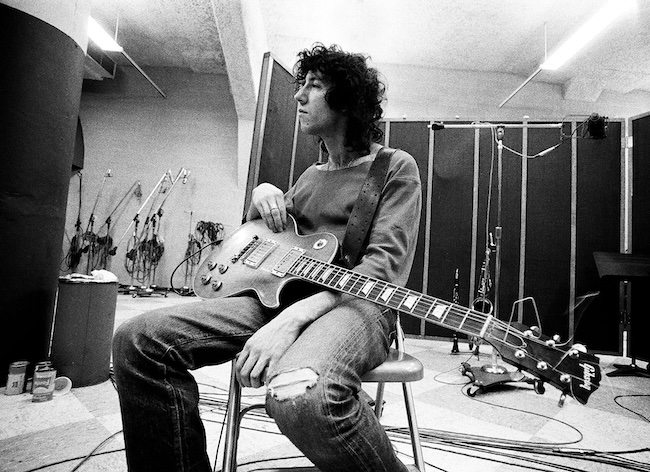
British blues legend and my favourite guitarist Peter Green has died at the age of 73 [25 July 2020]. In many ways I'm surprised he managed to live that long, as he was undoubtedly a prime candidate for an early rock-n-roll death in the 1970s. Thankfully that wasn't to be, though his drug use certainly ended his ascendency way before his time.
When I tell people one of my favourite bands is Fleetwood Mac, before they think I'm a huge fan of American soft AOR (though I like Rumours well enough), I have to quickly explain I mean Peter Green's Fleetwood Mac. The band were formed in 1967 and their first album, Fleetwood Mac, was very much standard blues - though a cut above many similar contemporary releases of the late-60s blues boom. Green had replaced Eric Clapton in John Mayall's Bluesbreakers, and though his album (A Hard Road, 1967) wasn't as polished as Clapton's the previous year, for me Green was the superior player by far - and he only improved from there.
That first Fleetwood Mac album had another fantastic ingredient in second guitarist Jeremy Spencer, strongly influenced by Elmore James and contributing one of the album's best tracks, James's Shake Your Money Maker. By 1969 a third guitarist had been added, Danny Kirwan, who contributed yet another dimension to an already deepening and creative force that was reaching beyond their bedrock of blues standards. This line-up produced Then Play On, their best album (in my opinion).
I remember buying Then Play On (an original issue, for £3.50) from the Wax Factor in Brighton and it immediately became a favourite, despite it not having one of my favourite songs, Oh Well Part 1 (which was added to later reissues). When I transferred much of my music to digital I actually recorded this album from my record as I loved all the little pops and crackles that had become embedded into the listening experience.
Peter Green was a huge influence on my own (amateur) music-making. Our band, in the early 90s, covered Oh Well Part 1 (we usually opened with it), and a Duster Bennett song (a friend of Green's), Jumping at Shadows, derived from the album Fleetwood Mac Live in Boston (which I had on yellow vinyl). Green's Man of the World has to be one of the most beautiful and heartbreaking songs committed to record (it reached number 2 in the UK charts three days after I was born in June 1969), and Rattlesnake Shake is a masterful subversive piece of blues-rock, encapsulating the humour that was always bubbling away under everything they did. But Green's musicianship was seriously good, he made every note count, never overplayed, and elicited a magical tone from his Gibson Les Paul.
Peter Green's musical career was hindered by mental health issues, either created or exasperated by his consumption of LSD, largely provided by a number of scoundrels and hangers-on that such bands tend to accumulate. He seems to have felt guilt at earning money, and disappeared from Fleetwood Mac, never again having a stable base from which to create and record. Green wasn't the only band member whose mind was fractured by drug use from that time - Jeremy Spencer became very mentally fragile and abandoned the band to join a religious cult (though is productive today as a musician and artist); and Danny Kirwan was similarly afflicted, a sensitive, creative soul who eventually had a breakdown and was sacked from the band - he ended up homeless and then in a hostel, dying in 2018.
Peter Green certainly lived a 'blues life', but was enormously respected by his peers, was looked up to by many, and was greatly loved and admired by his bandmates and collaborators. Those two years of Fleetwood Mac from 1968-69 burn incredibly brightly, not only in his own timeline, but in British musical history as a whole.